
Luxury Vinyl Plank vs Laminate: What's the Difference?
· By Anderson
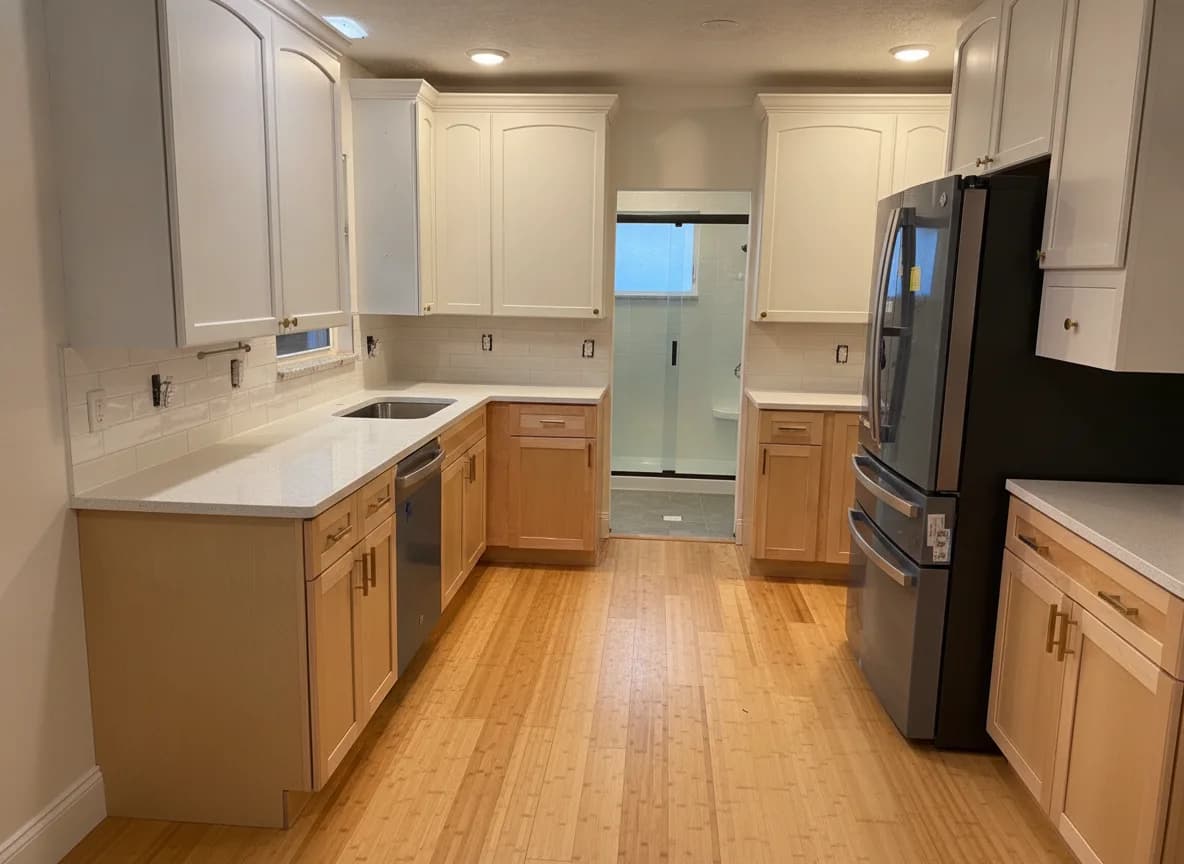
Walk down the flooring aisle and luxury vinyl plank (LVP) and laminate can look almost identical. Both mimic real hardwood, both click together, and both cost far less than solid wood. That surface-level similarity is exactly why so many homeowners get stuck on the vinyl plank vs laminate question before a single board goes down.
The real difference is on the inside, in how each product is built and how it reacts to moisture. In a place like Tampa Bay, where humidity, summer storms, and the occasional spilled glass are part of daily life, that inner construction is what decides whether your floor lasts fifteen years or starts swelling at the seams. Here is a straight comparison of both, with a note on which one usually wins in Florida and when laminate still makes sense.
How Each One Is Built
Luxury vinyl plank is made almost entirely of plastic. The core is either SPC (stone plastic composite), which mixes limestone powder with PVC for a rigid, dense board, or WPC (wood plastic composite), which uses a foamed core that feels a little softer and warmer underfoot. On top of the core sits a printed design layer and a clear wear layer that takes the abuse of daily foot traffic.
Laminate is built on a different foundation. Its core is HDF, or high density fiberboard, which is compressed wood fibers held together with resin. A photographic image layer sits on top of that wood core, sealed under a hard melamine wear surface. The image quality on modern laminate is excellent, but the material underneath is still wood-based, and wood-based means it responds to water very differently than plastic does.
Water Resistance: The Deciding Factor
This is the single biggest split between the two. Luxury vinyl plank is waterproof at the plank level. Because the core is plastic, water sitting on the surface does not soak in, swell it, or ruin the board. That does not mean water cannot travel through the seams to the subfloor, but the plank itself survives spills, mopping, and humidity without breaking down.
Laminate is water resistant at best, not waterproof. Many products are marketed as splash resistant, meaning they can handle a quick wipe-up, but standing water is the enemy. Once moisture gets past the wear layer or into the seams, the HDF core absorbs it, swells, and lifts. Those puffed-up edges do not go back down, and the fix is replacement. In humid air and around water-prone rooms, that is a meaningful risk.
Durability and Everyday Wear
Both floors are tough on the surface. Laminate is famous for being extremely scratch and dent resistant, thanks to that hard melamine top layer. If you have big dogs, kids, and heavy furniture that gets dragged around, laminate holds up to scuffing very well and often resists surface scratches slightly better than softer vinyl.
Luxury vinyl trades a little of that hardness for resilience and moisture immunity. SPC vinyl is very rigid and dent resistant, while WPC is a touch softer but more forgiving underfoot. The practical takeaway: laminate edges out vinyl on pure scratch resistance, but vinyl wins on the failure that actually ends most floors early, which is water damage. A scratch is cosmetic. A swollen, lifting plank is a tear-out job.
Look, Feel, and Comfort
In looks, both have come a long way. High-end laminate often has slightly crisper, more realistic wood grain and deeper embossing because the printing process on a wood core can capture fine detail well. Premium vinyl has closed most of that gap, and better LVP now includes realistic texture and matte finishes that read as convincing wood.
Underfoot, laminate tends to feel harder and can sound a bit hollow or clicky when you walk on it, which is why a good underlayment matters. WPC vinyl feels warmer and quieter, while rigid SPC feels closer to laminate in firmness. If comfort and sound are high on your list, especially in bedrooms or a busy living room, the warmer vinyl cores usually have the edge.
Cost: What You Can Expect to Pay
Pricing overlaps more than people assume. As a general range, basic laminate and basic vinyl plank both tend to start on the affordable end, while premium versions of each climb higher. Laminate can be marginally cheaper at the entry level, and mid-grade vinyl often costs a little more for the waterproof core, but the two categories compete closely rather than sitting in different price brackets.
Please treat any number you see online as a ballpark. Actual pricing depends on the product tier, the wear layer thickness, subfloor prep, room size, and current material costs, so the smartest move is a real quote for your specific space. At Prime Line Flooring the estimate is free with no visit fee, so you can compare both options for your exact rooms before you commit to anything.
Installation and Subfloor Prep
Both floors are typically floating click-lock systems, which means they lock together and rest over the subfloor rather than being glued or nailed down. That makes installation relatively fast and clean for either product. Vinyl is generally more forgiving over minor subfloor imperfections because the planks are flexible, while laminate wants a flatter, drier base to sit right.
Prep is where a lot of failures start, and it is easy to underestimate. In Florida, moisture rising up through concrete slabs is a real concern, so proper subfloor prep and, where needed, waterproofing and moisture barriers protect whichever floor you choose. Skipping that step is how a beautiful new floor ends up cupping or peeling a year later, no matter which product went down.
Why LVP Usually Wins in Florida, and When Laminate Still Fits
Put the comparison side by side and the pattern is clear. Laminate leads on scratch resistance and can look a hair sharper, and it can be a bit cheaper at the low end. Vinyl leads on the thing that matters most in a humid, storm-prone climate: it shrugs off water, high humidity, mopping, and spills that would ruin a laminate core. For most homes across Tampa Bay, St. Petersburg, and the surrounding area, that waterproof advantage is why luxury vinyl plank is the safer long-term pick.
Laminate still has a place. If you are furnishing a dry, low-moisture room like a formal bedroom or a home office, you want maximum scratch resistance for pets and heavy furniture, and budget is tight, quality laminate is a perfectly smart choice. The right answer really comes down to the room, the moisture exposure, and your priorities, which is exactly what a walkthrough and free estimate are for.
Frequently asked questions
- Is vinyl plank really waterproof and laminate is not?
- Yes. Luxury vinyl plank has a plastic core that does not absorb water, so the plank itself is waterproof. Laminate has a wood-fiber core that swells when water gets in, so it is only water resistant at best. In humid Florida rooms, that difference is the main reason vinyl is usually recommended.
- Which one is more scratch resistant?
- Laminate typically has a slight edge on pure scratch and scuff resistance because of its hard melamine top layer. Rigid SPC vinyl is also very durable, though. If you have large pets and heavy furniture in a dry room, laminate holds up beautifully; if moisture is a factor, vinyl is the safer overall choice.
- Is vinyl plank more expensive than laminate?
- They compete closely rather than sitting in separate price ranges. Entry-level laminate can be a little cheaper, while mid-grade waterproof vinyl may cost slightly more. Prices vary a lot by product tier, wear layer, and subfloor prep, so the most reliable answer comes from a free quote for your specific rooms.
- Does either floor need special subfloor prep in Florida?
- Yes. Florida slabs can push moisture upward, so proper subfloor prep and moisture barriers protect either floor from cupping or lifting over time. This prep is especially important for laminate, but it helps any floating floor last, which is why we build it into the process.
Related services
Serving
Found this helpful? Make us a preferred source on Google.
Ready for an exact price?
Get a free, no-pressure in-home estimate. Real numbers for your home, not a phone guess.